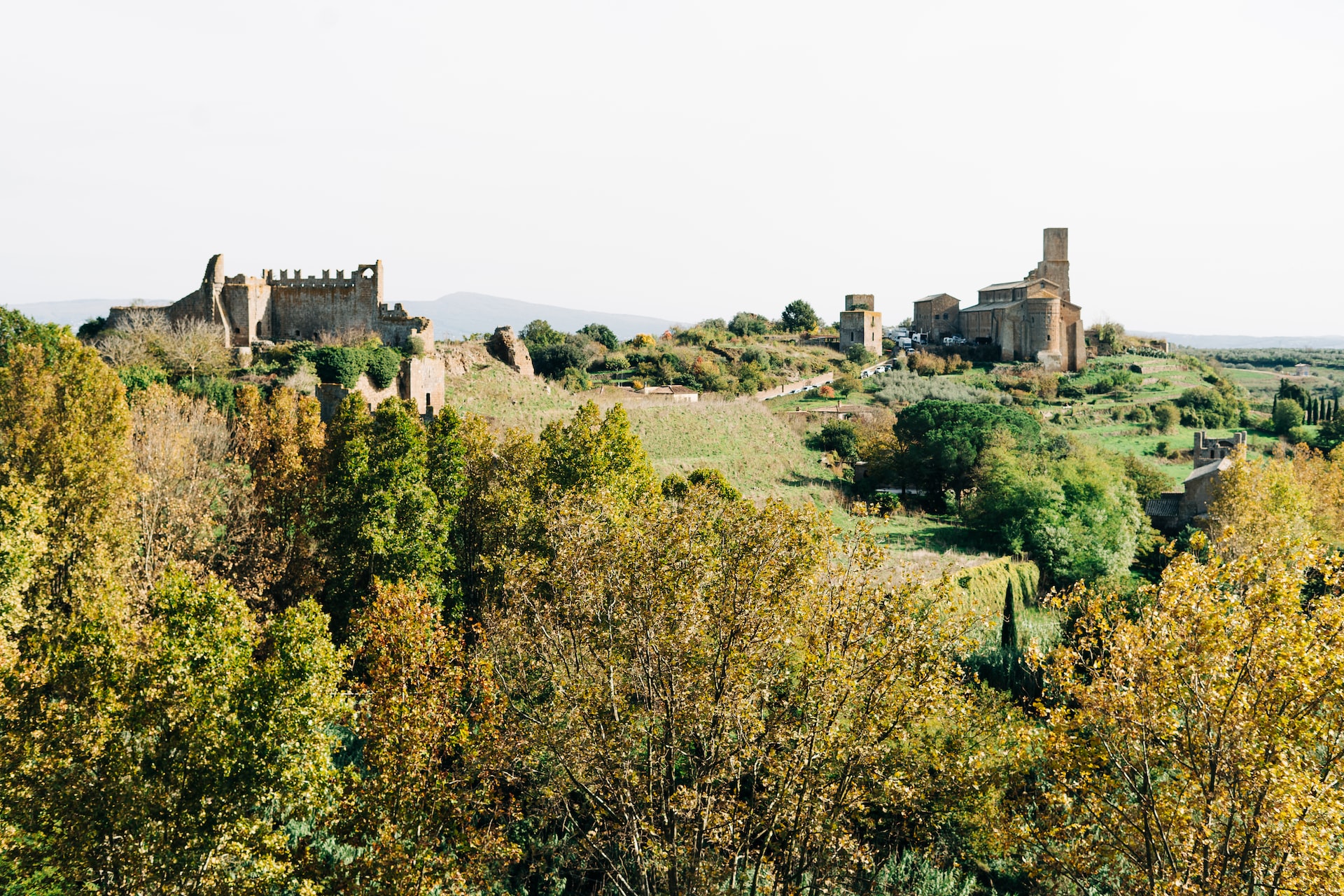
Just beyond the monumental layers of Rome lies a quieter, older story—one that predates the Roman Empire itself. The Etruscans, a sophisticated and still partly mysterious civilization, shaped much of central Italy long before Rome rose to power. Today, their legacy survives in extraordinary archaeological sites across the Lazio region, with Cerveteri and Tarquinia standing out as two of the most compelling destinations.
Exploring these ancient cities offers a completely different perspective on Italian history. Instead of imperial grandeur, you encounter a world of painted tombs, vast necropolises, and refined rituals that reveal a highly evolved society. For travelers looking to go beyond the typical landmarks, these Etruscan wonders near Rome represent an experience that is both cultural and deeply immersive.
Before focusing on the sites themselves, it’s essential to understand the importance of the Etruscans. Flourishing between the 8th and 3rd centuries BC, this civilization dominated central Italy and influenced many aspects of Roman culture, including architecture, religion, and urban organization.
What makes the Etruscans particularly fascinating is the aura of mystery that still surrounds them. Their language is only partially deciphered, and much of what we know comes from archaeological discoveries and funerary art. This is why visiting places like Cerveteri and Tarquinia is not just about seeing ruins—it’s about interpreting a culture through its most intimate expressions.
Located about 40 kilometers from Rome, Cerveteri is home to the Banditaccia Necropolis, one of the largest and most impressive Etruscan burial sites in the Mediterranean. Recognized as a UNESCO World Heritage Site, this necropolis offers a unique glimpse into how the Etruscans conceived the afterlife.
What makes Cerveteri extraordinary is its structure. The necropolis is organized like a real city, with streets, neighborhoods, and tombs designed to resemble houses. The famous tumuli—large circular burial mounds—contain chambers carved into rock, often arranged like domestic spaces with beds, corridors, and symbolic decorations.
Walking through this site creates a powerful contrast: although it is a place of burial, it feels surprisingly alive. The attention to detail suggests a belief in continuity between life and death, where the afterlife was imagined as a natural extension of daily existence.
Cerveteri is also particularly engaging because visitors can physically enter many of the tombs. This direct interaction transforms the experience into something much more personal, allowing you to step inside the mindset of an ancient civilization.
If Cerveteri impresses with its architecture, Tarquinia captivates with its art. Located further north along the Tyrrhenian coast, this ancient city is renowned for the Monterozzi Necropolis, another UNESCO-listed site that contains some of the most important examples of Etruscan wall painting.
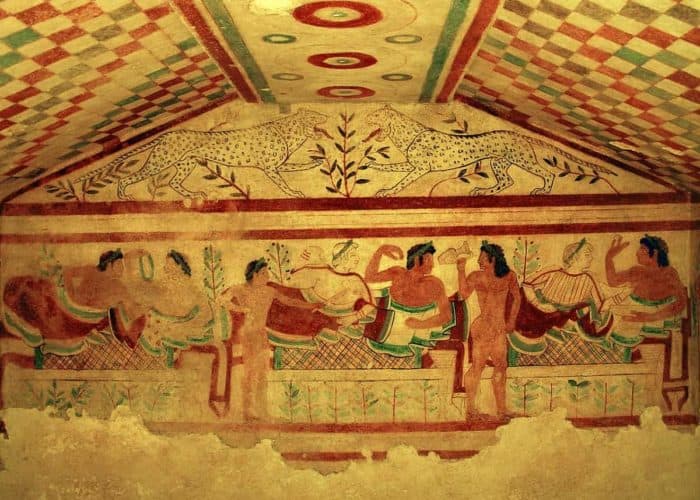
Here, the tombs are not defined by their size or structure, but by what lies within them. The interiors are decorated with vivid frescoes depicting scenes of banquets, music, dancing, hunting, and daily life. These paintings are remarkably well-preserved and offer a rare visual narrative of Etruscan culture.
Unlike the often somber tone of Roman funerary art, the imagery in Tarquinia is surprisingly vibrant. There is a strong sense of celebration, suggesting that death was not seen as an end, but as a transition into another phase of existence. The presence of joyful scenes indicates a worldview centered on continuity, pleasure, and community.
Visiting Tarquinia also includes exploring its historic center and the National Archaeological Museum, housed in the elegant Palazzo Vitelleschi. Together, these elements create a complete experience that blends archaeology, art, and landscape.
Although often mentioned together, Cerveteri and Tarquinia offer two very different experiences. Cerveteri is about space and structure—a vast necropolis that feels like a city frozen in time. Tarquinia, on the other hand, is about detail and storytelling, where the focus shifts to painted interiors and symbolic imagery.
Choosing between the two depends on what you’re looking for. If you want to walk through a monumental archaeological landscape, Cerveteri is the ideal choice. If you are more interested in art and visual storytelling, Tarquinia provides a deeper emotional and cultural connection.
For those with enough time, visiting both locations offers a complete understanding of Etruscan civilization, combining architecture, art, and anthropology in a single journey.
For cruise travelers arriving in Italy via the Port of Civitavecchia, visiting Cerveteri and Tarquinia offers a rewarding alternative to the classic Rome itinerary.
These destinations are relatively close to the port, making them ideal for a well-planned shore excursion. Unlike the busy streets of Rome, they offer a quieter and more contemplative experience, perfect for those who want to explore something truly unique within a limited timeframe.
A structured excursion is particularly useful in this context. Coordinating transportation, managing time, and navigating archaeological sites can be challenging without local knowledge. With a guided tour, everything is optimized—from departure times to site access—allowing you to focus entirely on the experience.
These excursions are especially appealing for travelers who have already visited Rome or are looking for something less crowded but equally meaningful. In just a few hours, you can explore two of the most important Etruscan sites in the world and gain insight into a civilization that shaped the foundations of Western culture.
Both Cerveteri and Tarquinia can be visited year-round, but the best time is during spring and early autumn, when temperatures are mild and the landscapes are at their most enjoyable. Summer visits are possible, but it’s advisable to plan early in the morning to avoid the heat.
Reaching these sites independently requires some planning. While Cerveteri is relatively easy to access by car or train, Tarquinia is slightly more remote. This is another reason why many travelers opt for guided tours, which simplify logistics and enhance the overall experience.
Visiting Cerveteri and Tarquinia is not just about exploring ancient ruins—it’s about entering a different way of thinking. The Etruscans left behind a legacy that is both tangible and elusive, expressed through architecture, art, and symbolism.
These sites offer a rare opportunity to connect with a civilization that existed before Rome, yet influenced it profoundly. They remind us that history is not linear, but layered, and that beneath every great empire lies a deeper, often overlooked story.
If you want to explore Cerveteri and Tarquinia without the stress of planning, transportation, and timing, the best choice is to rely on a curated experience that brings everything together seamlessly. These Etruscan sites are not just places to visit—they are stories to understand, details to notice, and atmospheres to fully experience.
With Discovery Guided Tours, you can turn a simple day trip into a well-structured journey through history, guided by experts who know how to make every stop meaningful. From the moment you leave Rome to your return, every aspect is designed to maximize your time and deepen your understanding of these extraordinary places.
Book now a tour of the surroundings of Rome with Discovery Guided Tours and experience Cerveteri and Tarquinia in the most complete and effortless way.
you may be interested:
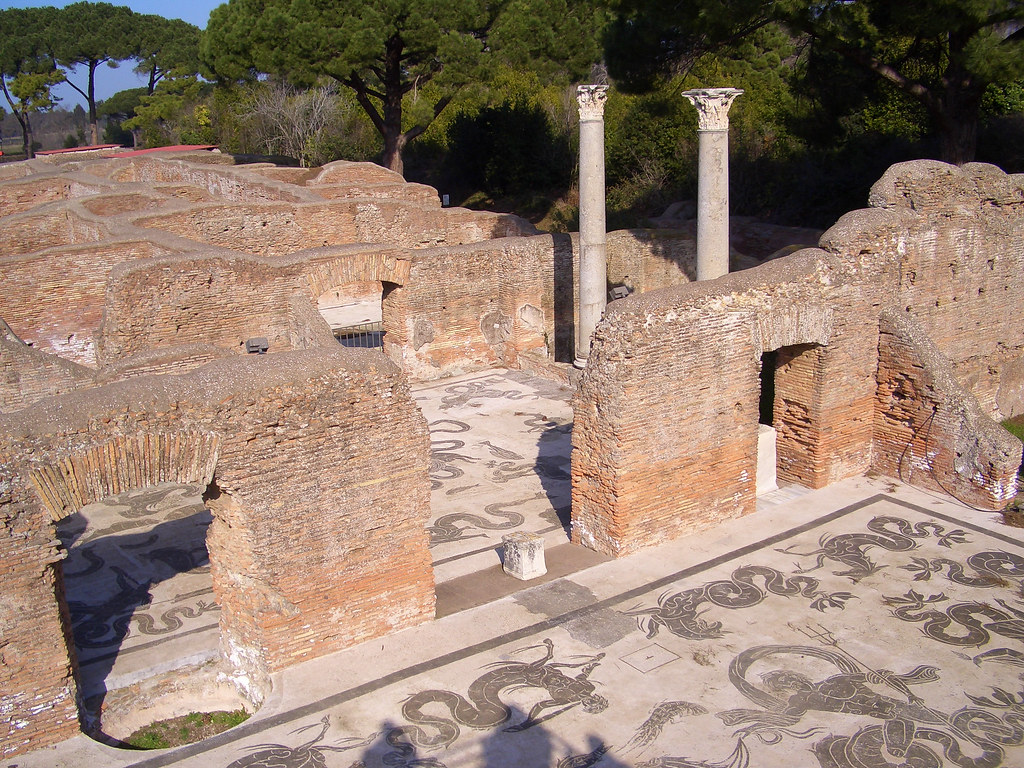
Timeless wonders on this private tour of Ostia Antica and Cerveteri A private shore excursion with pick up and drop off at the dock of your cruise ship in Civitavecchia port. This tour is for those attracted to history, archeology and adventure. A trip to visit settlements from Ancient Romans and their predecessors, the Etruscans. Unveiling Ostia Antica: Beyond the Ruins, a tour through History and Architecture Step into the ancient heartbeat of Rome at Ostia Antica, once a bustling seaport hidden in the lush meadows between the Tiber River and the Tyrrhenian Sea. This thriving commercial center was home to over 100,000 inhabitants, who conducted their existences in the now remarkably preserved apartment buildings, taverns, and grocery shops. Walk along the very streets they walked on, with their horse carriages and carts. Here in Ostia Antica, walking through the ruins of this ancient citadel, you'll have the opportunity of entering the lives of ancient inhabitants, discover their lifestyles and habits. Make this tour extra special, by adding one of our Archeological guides to your booking. An expert in Roman history to take you to visit the depths of Ostia Antica, learning all about this historical site. And the incredible buildings that reflect a majestic lifestyle in perfect Roman Style. After the Excursion in Ostia you'll head to your next destination. Just in time for lunch: Indulge in Roman Delights at Cerveteri's Finest Trattorias, Handpicked by Your Tour Driver Discover the Majesty of Cerveteri: Home to the Largest Ancient Necropolis in the Mediterranean. Following a delightful Roman lunch, your journey continues to the fascinating Necropoli della Banditaccia in Cerveteri. Recognized as a UNESCO World Heritage Site, this necropolis sprawls across a vast 400 hectares, although only 10 hectares are open to visitors. Within this limited area lie approximately 1,000 tombs, often nestled within distinctive mounds. Step into history as you explore tombs dating from the 9th to the 2nd century BC, each revealing unique insights into ancient burial customs. Wander through the labyrinthine streets of this 'city of the dead,' where you can peer into tombs and envision life in antiquity. Cerveteri was a predominant Etruscan city. A flourished establishment, far before the rise of Rome. Visiting Cerveteri you will immediately notice the inheritance of a rich legacy of art, architecture, and cultural practices in the region the Etruscans have left behind. Other sites to visit here include the Etruscan Museum The National Etruscan Museum of Cerveteri (Museo Nazionale Cerite), houses a vast collection of artifacts, pottery, jewelry, sculptures, and funerary items, discovered in the nearby Necropolis, offering a true insight on the lifestyle and traditions of such an ancient civilization. After a full-immersion tour of some of the most incredible, awe-inspiring historical places in Central Italy, you'll head back to your cruise ship
price from €105.00
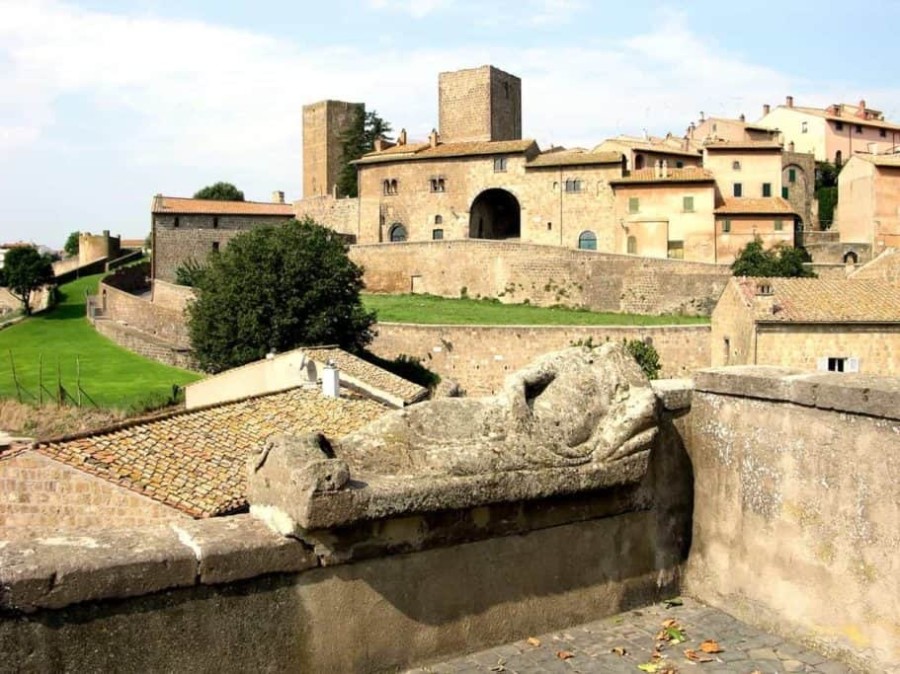
A tour of the Etruscan highlights, to explore the History of Tarquinia, Ceri and Cerveteri This tour is certainly a more unusual activity, to tell friends and family about, during your Italian Cruise. If you've been to Rome already, and are looking for something original to explore the surrounding villages, discover ancient civilizations, visit places off the beaten path, this is the perfect tour for you! A private shore excursion for those of you who are intrigued by Italian culture and history, from the earliest years to today. This private tour of Tarquinia, Ceri and Cerveteri will let you explore some of the most ancient Eras of central Italy, to discover fascinating architectures, art and traditions of Etruscan civilization. A tour to essentially learn more on how this unique lot of people became an incredible and important civilization, and how their presence on the territory has affected modern day. The villages you will visit, in the Countryside of Rome are beautiful! Picturesque hamlets perfectly framed in ancient atmospheres. Visit Tarquinia, a hamlet in the shoreline, awarded UNESCO World Heritage for its ancient Necropolis This town lives up to the title of World Heritage. A small place, located a few miles from the Tyrrhenian shore line, with incredible views of the surrounding landscapes. This was an ancient town, inhabited from Ancient Etruscan times all the way to the Post Roman Era. It hosts many great things to see, from the Town square, to the many churches and buildings in Romanesque-Gothic style, with beautiful facades and bell towers. Then there is also, the most unique and well-supplied Etruscan Museums in the World, hosting fascinating artifacts including the famous frieze of Winged horses in terracotta. And of course, there is the famous Necropolis of the Monterozzi. A system of over 6000 tombs, under mounds of rock, entirely carved-in. Well-preserved hosting sarcophagi, paintings, tombs, frescoes and artifacts. Depending on the social standpoint, it was customary for the Etruscans to be buried in tombs resembling small apartments, beautifully decorated From Tarquinia, you will visit Ceri, an Etruscan Fortress-village! A beautiful Village, Ceri. A hamlet, perched and entirely carved on a steep cliff of tuff rock. Quite fascinating to see. This little town was built to resemble a fortress. You can notice it immediately, just by looking at the town walls! The best thing about this area, is that the traditional cuisine. Your personal tour driver will be happy to recommend a nice Trattoria, to enjoy the BEST meal you will have in the area. After lunch your tour continues to the final stop for the day, Cerveteri. Another picturesque little town, probably the most famous of them all. Cerveteri hosts one of the most prominent Etruscan Archeological site. Two stops to make, that are absolutely required, to keep the "theme" alive: The Necropoli della Banditaccia, which is another UNESCO World Heritage Site. Almost a thousand Acres of mounds and tombs. Only 25 of which are open to public! One of the tombs you should definitely see there is the most impressive burial place of all. It's called the Tomb of the Reliefs. An outstanding underground chamber that hosts incredibly well preserved frescoes and reliefs and original paintings from the late Etruscan Era! It dates back to the 4th Century bC, but was discovered in the mid 1800s! This is certainly Cerveteri's landmark. Make one last stop at the National Archeological Museums of Cerveteri, built in a 13th Century Castle, where you can find ancient artifacts for the most ancient civilization ever registered in the region. From Cerveteri, your tour driver will take you back to the dock of your cruise ship in Civitavecchia.
price from €94.00
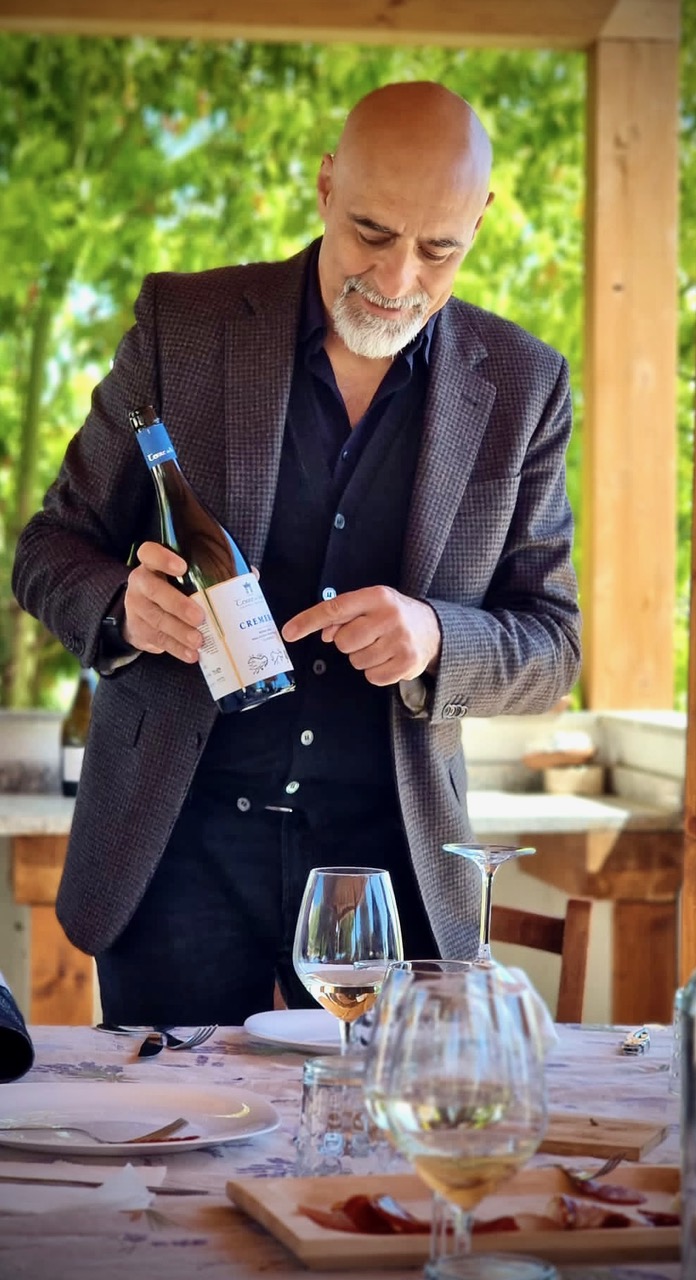
Discover a perfect blend of history, countryside, and wine on this immersive shore excursion from Civitavecchia Port to Cerveteri and Torre in Pietra, two gems of the Roman coastal hinterland. We’ll welcome you in Port One of our private drivers will welcome you at the dock of your cruise ship. After a brief introduction, you’ll travel inland to Cerveteri, a town famous for its Etruscan heritage. With your private tour driver at your service for fun facts and anecdotes on what you’ll see and do Here you’ll enjoy free time to explore the historic center or visit the renowned Etruscan Necropolis of the Banditaccia (UNESCO World Heritage Site), one of the most important and best-preserved Etruscan burial sites in Italy. Walking among these ancient tombs carved into the tuff stone offers a fascinating glimpse into a civilization that predates Rome itself. Explore the Town of Cerveteri as an alternative. Breath in the rustic atmosphere, indulge in a little shopping, workshops, cellars, take home a piece of these wonderful places. Following your visit to Cerveteri, continue through the scenic countryside toward Torre in Pietra An area historically linked to agriculture and viticulture. Your destination is a family-run winery, where you will be personally welcomed by the winemaker. You will meet Marco, the sommelier: your personal wine expert and experience leader The visit begins with a guided tour of the winery, during which you’ll see all the essential equipment used in wine production: fermentation tanks, barrels, presses, and bottling areas. The entire process — from grape harvesting through fermentation, aging, and bottling — is clearly explained in an engaging and approachable way. After the cellar visit, you’ll sit down for a memorable wine-paired meal served in a truly unique setting: A medieval grotto carved into a tuff stone hill This atmosphere creates the perfect dramatic backdrop during your lunch (available every day except for Wednesdays). Instead of the grotto, a private dining room can be reserved for larger groups. The meal includes four generous courses: A rich selection of starters (Antipasti) A freshly prepared pasta dish A meat-based main course A dessert All to pair with a selection of 5 glasses of their finest products: including sparkling wine, white wine, red wine, and a dessert wine. Water, coffee, and — if desired — a small glass of grappa is all included. Marco will take you on a wonderful journey, to feed your soul and your belly. Special dietary needs are easily accommodated, including allergies, intolerances, and vegan options (fish is not served). After the experience, relax on the return drive to Civitavecchia Port, arriving well in advance of your ship’s departure — enriched by ancient history, local wines, and genuine Italian hospitality.
price from €225.00
Today you will learn about the Etruscan civilization and you will have the chance to see and tour Tarquinia & Cerveteri, two of Italy’s great Etruscan cities, whose origins could date from as far back as the 9th century B.C and famous for a number of Etruscan necropolises. Visit Tarquinia Situated on a small hill overlooking the beautiful natural landscapes , you will find the greatest Etruscan museum in the World.With well-preserved sarcophagi, paintings, tombs, frescoes and the largest Etruscan necropolis, walk along the streets of the town. Visit the Etruscan Museum with its best collections like the 4th Century BC terra-cotta Winged Horses . And the Necropolis of Tarquinia with its 6000 graves carved in rock. You will also visit to Ceri, an Etruscan Fortress-village! Your tour driver can recommend a great local restaurant where you could have a traditional lunch! Then make sure to take a stroll around the village to visit some of the breathtaking venues! Finally you’ll head to Cerveteri where you can visit the necropolis. The most famous attraction of Cerveteri is the Necropoli della Banditaccia, which has been declared by UNESCO a World Heritage Site. It covers an area of 400 hectars, only 10 of which can be visited. The Tomb of the Reliefs is certainly the most impressive tomb of the whole necropolis of Banditaccia. And the museum in Cerveteri is definitely worth a visit. Here you can admire Etruscan art and artifacts found locally, including the contents of some of the tombs. After this private tour you will return to your requested location in Rome.
price from €100.00
If you are really into learning about local culture and history, this tour might be perfect for you This private tour of Tarquinia and Tuscania will give you an idea of just how intricate the Roman countryside really is, every town, every place, every landscape, holds its secrets. Traditions, history, Etruscan archeology, nature, these are the focus points of this activity. One of our personal, highly entertaining and knowledgeable tour drivers, will welcome you at the dock of your cruise ship in Civitavecchia Port. Holding a sign with your name. Departing the Port, you'll travel inland to the Tuscia area of Upper Latium. After a brief introduction from your tour driver, you'll soon arrive in the first destination. Tarquinia, one of the most important Etruscan cities This village is not only a true delight for its architectures, completely surrounded by hills and beautiful landscapes, it is also one of the most well renowned Etruscan built citadel. The Etruscans were one of the predominant civilizations here in Italy, far before the Roman Empire. So this tour will give you the opportunity to better learn about the ancient times of the Italian Peninsula. Through the archeological sites and architectures. In fact, Tarquinia has the greatest Etruscan museum in the World! The National Archaeological Museum, is a World Heritage Site. It is hosted in the Aristocratic Vitelleschi Palace. A beautiful Gothic and Renaissance building. If you are planning on visiting it, the museum is dislocated in two sections: On the ground floor, you can find recoveries placed in chronological order of stone materials from artifacts to marble sarcophagi dating the 4th Century bC! (One of the most impressive halls would be Room Number 10, keep that in mind if you plan on visiting the Museum). The first floor hosts the marvel of Etruscan Art, the beautiful and famous sculpture of the "Winged Horses" a terracotta relief, immaculate conditions, from the 4th century bC. Then other beautiful artworks and reliefs from the later ages. We always like recommending a visit of the Museums, to better understand the culture and traditions of such an ancient civilization through artwork, sculptures and discoveries made in the nearby archeological sites, of theMonterozzi Necropolis. A system of chamber tombs beautiful decorated and painted with frescoes. This ginormous site hosts 6000 graves the oldest of which dates back the 7th Century bC. Next destination, Tuscania A beautiful village, entirely carved in Tuff, a rocky material greatly present in the area. Here your tour driver can recommend some typical restaurants, where you can enjoy a nice and relaxing lunch. There are many Roman and Etruscan burial sites in the Tuscania area, especially along the River banks. They house Etruscan tombs that have preserved the personal belongings of a famous Etruscan family which are now exposed in the Archaeological National Museum of S. Maria Del Riposo. In the medieval historical center of Tuscania, you will enjoy visiting some beautiful ancient Churches, one of which is actually built on an Etruscan acropolis. That’s how fascinating this village is! Upon request, to make the experience the best YET, you can select the service of one of our historian and guides for a private guided tour of Etruscan wonders The area also hosts some great locations where you can enjoy a nice lunch in a local Trattoria, for a real traditional dish. A true delight, your personal tour driver will be happy to recommend the best spots. From Tuscania, you'll later return to Civitavecchia in perfect time to board your ship. After a day exploring the depths of the Central Italian history.
price from €110.00


 +39 06.999.77.65
 +39 350.194.03.96
 info@discoveryguidedtours.com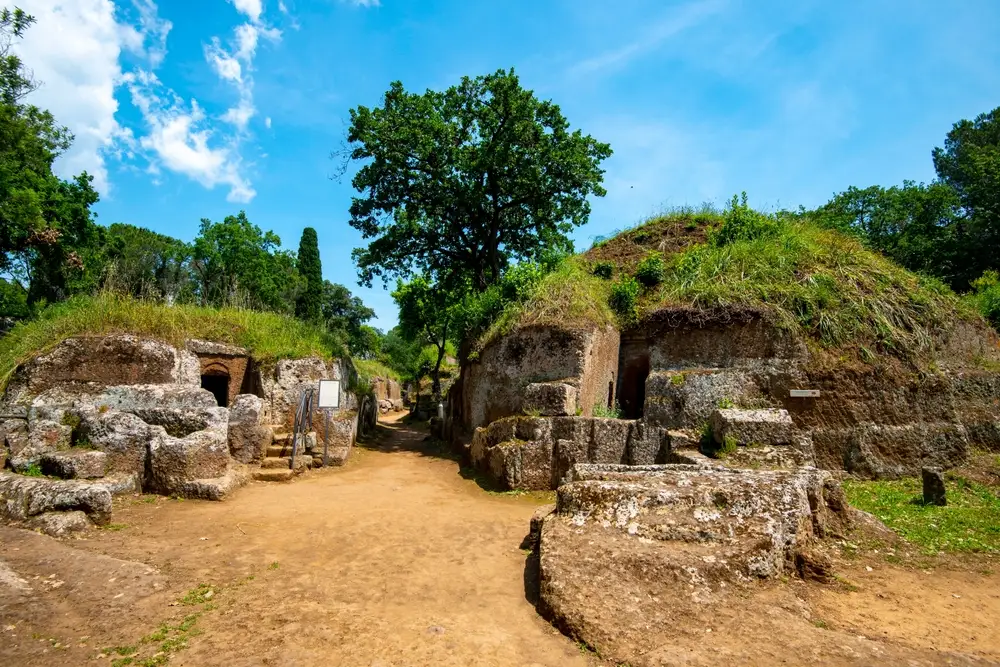

 9 hours