Tucked inside the green heart of Rome, the Galleria Borghese is one of the most extraordinary museums in the world. Unlike vast institutions where masterpieces are dispersed across endless halls, this elegant villa offers an intense, almost intimate encounter with art. Here, sculpture, painting, architecture, and decorative arts converge in a setting that feels closer to a private palace than a public gallery. Stepping inside means entering the refined universe of Cardinal Scipione Borghese, the passionate collector who transformed his residence into a treasure chest of Baroque genius.
What makes the experience unforgettable is the concentration of iconic works by two towering figures of the 17th century: Gian Lorenzo Bernini and Michelangelo Merisi da Caravaggio. Their masterpieces are not just displayed — they define the identity of the gallery itself.
Before even encountering the artworks, the building sets the tone. Constructed in the early 1600s within the sprawling Villa Borghese gardens, the villa was designed as a space for entertainment, diplomacy, and the display of cultural power. Marble floors gleam beneath frescoed ceilings, and sunlight filters through tall windows, illuminating sculptures placed exactly where Cardinal Borghese intended.
Unlike traditional museums organized chronologically, the Borghese Gallery preserves the theatrical arrangement of a noble collection. Paintings and statues converse across rooms, creating visual narratives that reveal the collector’s taste and ambition. This deliberate staging intensifies the emotional impact of each work.
Visitors often notice how human-scaled the experience feels. Limited entry times and controlled visitor numbers allow you to move through rooms without the overwhelming crowds typical of major museums. The result is a rare sense of proximity to masterpieces that usually exist behind barriers.
If one artist defines the spirit of the gallery, it is Bernini. A prodigy favored by Cardinal Borghese, he transformed marble into living flesh, capturing movement, emotion, and narrative in ways never seen before.
The sculpture of Apollo and Daphne freezes a moment from mythology as the nymph transforms into a laurel tree while fleeing the god’s pursuit. Leaves sprout from her fingertips, bark envelops her body, and Apollo’s astonishment is palpable. The piece is designed to be viewed from multiple angles, revealing different stages of the metamorphosis as you circle it.
Equally striking is David, depicted not in calm triumph but in the explosive instant before releasing the sling. His twisted torso, furrowed brow, and tense muscles embody the Baroque fascination with drama and motion. Unlike Renaissance versions, Bernini’s David seems to invade the viewer’s space, drawing you into the biblical narrative.
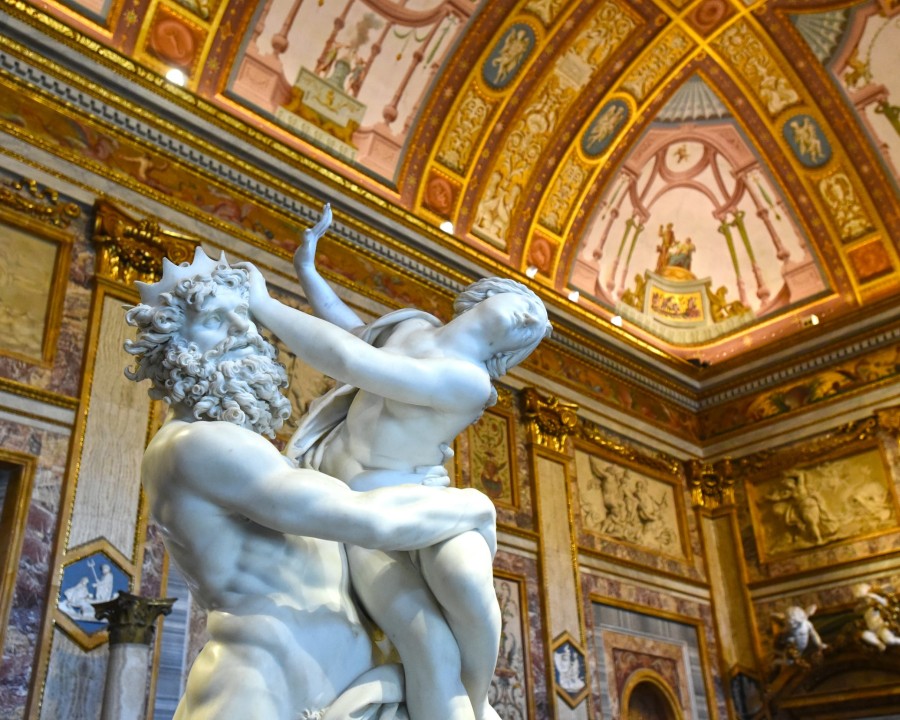
Another highlight, The Rape of Proserpina, showcases the sculptor’s astonishing technical skill. Pluto’s fingers press into Proserpina’s thigh with such realism that the marble appears soft. Tears streak her face as she struggles, capturing both physical and psychological intensity.
Together, these works demonstrate why Bernini is often considered the ultimate interpreter of Baroque dynamism. In the Borghese Gallery, his sculptures are not isolated artifacts but protagonists in a theatrical environment.
While Bernini captivates through movement, Caravaggio revolutionizes through light. His paintings in the gallery reveal a radical vision that broke with idealized traditions and introduced a raw, almost cinematic realism.
In Boy with a Basket of Fruit, the sensuality of ripe produce and the vulnerability of the young model merge into a meditation on beauty and transience. The still life elements are rendered with scientific precision, yet the mood remains intimate and ambiguous.
Saint Jerome Writing presents the scholar absorbed in contemplation, illuminated by a beam of light that cuts through darkness. The dramatic contrast between illumination and shadow — known as chiaroscuro — became Caravaggio’s signature and influenced generations of artists.
Perhaps the most emotionally charged work is David with the Head of Goliath, painted late in the artist’s life. The severed head bears Caravaggio’s own features, transforming the biblical scene into a personal reflection on guilt, redemption, and mortality.
These paintings reveal why Caravaggio’s art continues to resonate with modern audiences. His figures are not distant saints but flawed, tangible human beings emerging from darkness into light.
Visiting the Borghese Gallery requires planning. Entry is limited to timed slots, typically lasting two hours, which ensures a calm atmosphere but also demands an efficient itinerary.
Many visitors choose to focus on key rooms where Bernini and Caravaggio’s works are concentrated. Starting on the ground floor allows you to experience the sculptural masterpieces first, when energy and curiosity are at their peak. The upper floor, with its luminous paintings and decorative ceilings, offers a more contemplative pace.
Because photography is restricted in certain areas and crowds are controlled, the experience feels almost private. Taking time to sit and observe details — the curl of a marble lock of hair, the glint of light on a painted sword — transforms the visit from a checklist into a dialogue with art.
Although these two giants dominate attention, the gallery houses a remarkable collection spanning Roman antiquity to the Baroque. Works by Titian, Raphael, and Canova enrich the narrative, illustrating the evolution of artistic expression across centuries.
The surrounding gardens of Villa Borghese extend the experience outdoors. After the intensity of the galleries, strolling through shaded paths and overlooking Rome from the Pincian Terrace provides a moment of reflection. The contrast between artistic grandeur and natural tranquility is part of the gallery’s enduring charm.
What sets the Borghese Gallery apart is not only the quality of its collection but the coherence of its vision. It remains a testament to one collector’s passion and to an era when art was inseparable from power, prestige, and personal identity.
Here, masterpieces are not diluted by scale. Instead, they confront you directly, inviting a slower, more attentive form of viewing. The encounter with Bernini’s sculptures and Caravaggio’s paintings becomes intensely personal, almost theatrical, as if the artists themselves were guiding you through their creations.
For anyone seeking to understand the emotional force of Baroque art, stepping inside this villa is essential. It is a place where stone seems to breathe, shadows pulse with life, and centuries-old stories unfold with startling immediacy.
The most effective way to experience the Galleria Borghese is with a carefully planned visit that includes advance reservations and a structured route through the rooms. Entry is limited to timed slots, which means every minute inside counts. Arriving prepared allows you to focus on the masterpieces by Gian Lorenzo Bernini and Caravaggio without feeling rushed or missing key works. Understanding the layout beforehand also helps you move smoothly from the sculptural drama of the ground floor to the luminous paintings upstairs.
For a deeper and stress-free experience, joining a guided visit is often the smartest choice. An expert guide can reveal hidden details, explain the stories behind the artworks, and place them within the broader context of Baroque Rome — insights that are difficult to gain independently during a short time slot.
To fully appreciate the gallery without worrying about logistics, consider booking a dedicated Borghese Gallery tour with Discovery Guided Tours. A guided experience ensures priority access, clear commentary, and a richer understanding of one of Rome’s most extraordinary museums.
you may be interested:
Exclusive Private Tour of the Borghese Gallery and Gardens Step into a world of artistic brilliance and serene beauty on this private tour of the Borghese Gallery and Gardens, one of Rome’s most exclusive and intimate cultural experiences. Discover Masterpieces in the Borghese Gallery Enjoy pre-booked admission for seamless access to one of Rome's most renowned museums. Accompanied by an expert art history guide, you’ll uncover the stories and significance behind the masterpieces of Baroque and Renaissance art, including: Bernini’s Sculptures: Marvel at his breathtaking works, including Apollo and Daphne, David, and The Abduction of Proserpine. Caravaggio’s Paintings: Be captivated by the dramatic use of light and shadow in his masterpieces. Raphael and Titian: Admire Sacred and Profane Love by Titian and Raphael's stunning contributions to the art world. Canova’s Venus: Gaze at the scandalous yet mesmerizing portrait of Paulina Borghese, Napoleon’s sister, sculpted by Antonio Canova. The Borghese Gallery, commissioned in 1613 by Cardinal Scipione Caffarelli Borghese, nephew of Pope Paul V, is a treasure trove of artistic genius. Designed by Flaminio Ponzio and later completed by Giovanni Vasanzio, this villa-turned-museum is a celebration of art, culture, and history. A Stroll Through the Borghese Gardens After your gallery visit, say goodbye to your guide and enjoy a leisurely walk through the Borghese Gardens, once a vineyard and now one of Rome’s most enchanting parks. Developed by the same Cardinal Borghese who envisioned the gallery, the gardens offer: Peaceful pathways surrounded by lush greenery. Stunning views of Rome’s cityscape from hidden vantage points. The Perfect Tour for Art and History Enthusiasts This private tour is ideal for individuals, couples, families, and small groups looking for an in-depth journey into the heart of Baroque and Renaissance art. Led by a carefully selected Art History expert guide, you’ll enjoy a personalized experience tailored to your interests. Why Choose This Tour? Exclusive access to one of Rome’s cultural gems. Insights from a knowledgeable guide passionate about art and history. A combination of artistic marvels and natural beauty. Immerse yourself in the artistic splendor of the Borghese Gallery and the serene elegance of the Borghese Gardens on this unforgettable private tour. Let us take you on a journey through Rome’s cultural treasures like never before! Upon request we can arrange round-trip transportation for you
price from €87.50


 +39 06.999.77.65
 +39 350.194.03.96
 info@discoveryguidedtours.com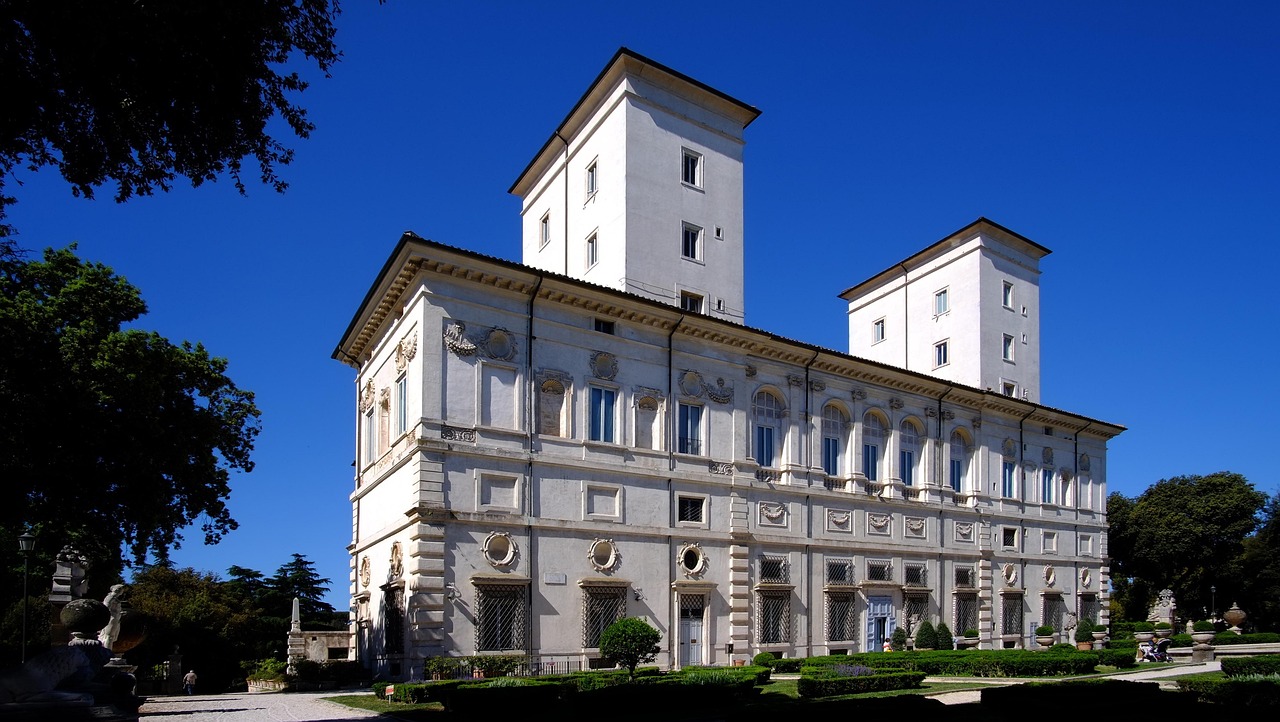

 3 hours